What to know about skip permits and rubbish removal Greenwich
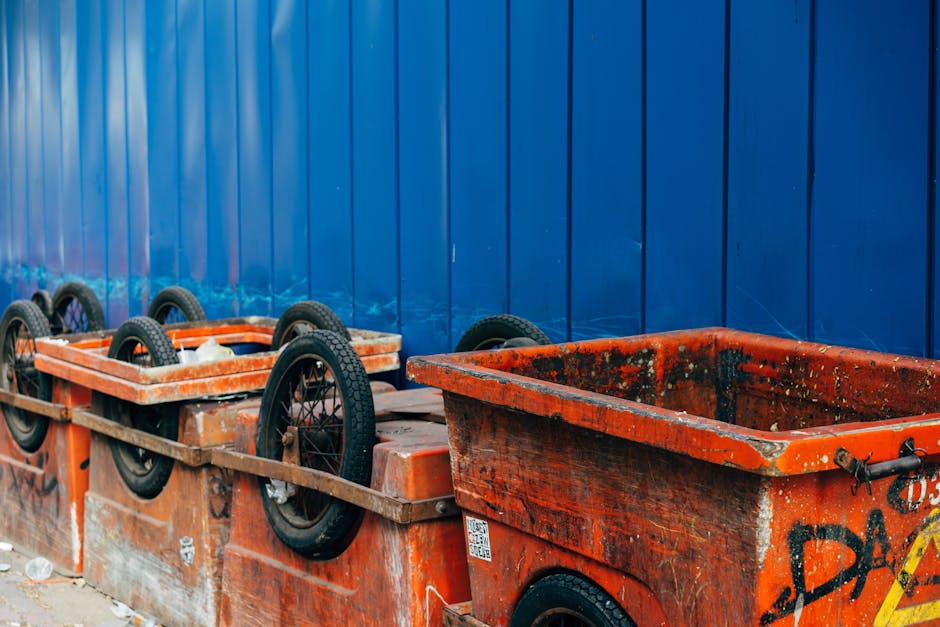
If you are staring at a pile of broken furniture, old bags, DIY rubble, or garden waste and thinking, "Right, where do I even start?", you are not alone. What to know about skip permits and rubbish removal Greenwich comes down to one simple idea: pick the right waste solution for your space, your timeline, and the rules that apply where you live. In Greenwich, that often means deciding between a skip permit, a full skip hire, or a more flexible rubbish removal service that loads and clears everything for you.
It sounds straightforward. In practice, there are a few moving parts. You need to think about where a skip can sit, whether it would be placed on a public road, how quickly you need the waste gone, and what kind of rubbish you actually have. The good news? Once you understand the basics, it becomes much easier to avoid costly mistakes and get the job done cleanly. Let's walk through it properly.
Why What to know about skip permits and rubbish removal Greenwich Matters
Greenwich is busy, built-up, and full of properties where access is not always generous. That matters because waste removal is not just about getting rid of rubbish; it is about doing it without causing nuisance, blocking roads, upsetting neighbours, or ending up with a permit problem that slows everything down.
A skip on private land is one thing. A skip on a public highway is another. If there is no driveway, front garden, or suitable private space, you may need a permit before the skip can legally sit on the road. That is where many people get caught out. They arrange the skip, the lorry arrives, and suddenly there is a delay because the paperwork was not sorted in time. Not ideal. Especially when you have already spent the morning dragging old shelves down the stairs.
Rubbish removal in Greenwich also matters because not every project needs the same approach. A flat clearance after a move, a home declutter before renovation, or a pile of builders' waste from a bathroom refit all have different demands. The wrong choice can cost extra time and money. The right choice keeps the job tidy, fast, and far less stressful.
Another reason this topic matters is accountability. Waste must be handled properly, especially if you are using a service rather than taking items to a tip yourself. You want the reassurance that your rubbish is collected responsibly and that you are not leaving yourself exposed to avoidable problems. A clean driveway is lovely. A clean conscience is better.
How What to know about skip permits and rubbish removal Greenwich Works
At its simplest, the process splits into two paths: skip-based waste removal and labour-based rubbish removal. Both can work well, but they suit different situations.
Skip permits in plain English
If a skip is placed on private property, such as a driveway, a permit is usually not needed. If it has to go on a public road or pavement, a permit is generally required from the relevant local authority or managed through the skip provider, depending on the arrangement. The details can vary, so it is always worth confirming the practical steps before booking. In Greenwich, space is often the deciding factor.
Think of a permit as the official permission slip for occupying part of the public highway. It helps manage safety, traffic flow, and visibility. No one wants a skip left where it blocks sight lines near a junction or makes parking a nightmare for everyone on the street.
How rubbish removal usually works
Rubbish removal is more flexible. A team arrives, loads the waste for you, and takes it away in one go. This is especially useful if:
- you do not want a skip outside for several days
- you have limited space outside the property
- the waste is awkward, heavy, or bulky
- you want the job cleared quickly
In many real-world situations, rubbish removal feels simpler because you do not need to estimate how much space the waste will take in a skip. If you are not great at visualising cubic yards, fair enough, most people are not.
What happens from booking to collection
- You describe the waste. Be honest about what you have: household items, garden waste, builders' waste, or mixed rubbish.
- The provider advises the best option. That may be a skip, a collection team, or another waste clearance method.
- Access and timing are checked. Narrow roads, parking restrictions, and delivery windows matter in Greenwich.
- The waste is removed. With a skip, you load it yourself over time. With rubbish removal, the team usually loads it for you.
- Waste is disposed of responsibly. Good practice includes sorting recyclables and disposing of waste through approved channels.
That is the core process. Simple on paper, a little less simple when there is a sofa wedged in a hallway or plasterboard stacked in the rain, but still manageable.
Key Benefits and Practical Advantages
Choosing the right waste solution in Greenwich can save a surprising amount of hassle. Here are the main benefits people tend to value most.
- Cleaner site management: Waste does not pile up in the garden, hallway, or driveway.
- Better time control: You can clear rubbish around your schedule, especially with a skip.
- Less lifting for you: Rubbish removal teams do the heavy lifting, which is a relief if the waste is bulky or awkward.
- Fewer compliance headaches: A properly arranged permit reduces the risk of issues if a skip needs to sit on the road.
- More suitable for tight spaces: Rubbish removal can be easier where access is limited.
- Improved safety: Less loose waste means fewer trip hazards and less clutter around the property.
There is also a practical financial angle. A skip can be cost-effective if you have a steady flow of waste over several days. Rubbish removal can be better value when you want a fast clear-out and do not need the container sitting outside. The trick is matching the method to the job, not just chasing the cheapest headline price.
Expert summary: In Greenwich, the best waste solution is usually the one that fits your space first, your timeline second, and your waste type third. Get those three right and the rest tends to fall into place.
Who This Is For and When It Makes Sense
This topic is relevant to quite a few people, and not just homeowners tackling a one-off clear-out. In fact, some of the most common users are those in smaller properties where access is tight and waste builds up quickly.
Homeowners and landlords
If you are clearing a loft, garage, garden, or spare room, you may need enough time to sort through everything properly. A skip can be helpful if the work will take a few days. Rubbish removal is often better when the aim is to clear everything in one visit.
Tenants and flat residents
Flats present a different challenge. Limited access, shared entrances, parking restrictions, and neighbour sensitivity all matter. For this reason, many people in flats find rubbish clearance easier than managing a roadside skip. If you live in a block, you will know how quickly a bulky item can turn into an argument with the staircase. Nobody needs that.
Builders, tradespeople, and renovators
DIY and small renovation work creates rubble, packaging, timber, old fixtures, and sometimes mixed waste. Builders' waste often suits a skip, but a same-day collection can be more efficient for lighter, mixed loads or jobs with little storage room. For broader site work, some people also look at builders' waste clearance as a more practical option than leaving materials to build up.
Businesses and offices
Commercial premises often need waste removed without disrupting staff, customers, or opening hours. For that reason, office clearance and business waste services can be more appropriate than a traditional skip, especially if the premises are on a tight street or shared site. If that sounds familiar, business waste support may be the cleaner route.
So when does it make sense? Usually when the waste volume, access, urgency, and property type all point in the same direction. If they do not, stop and rethink for a minute. That minute can save you a day later.
Step-by-Step Guidance
If you want a smooth experience, it helps to work through the decision in order rather than guessing. Here is a simple, practical process.
- Identify the type of waste. Separate household rubbish, furniture, garden waste, builders' waste, and anything that may need special handling.
- Check access. Ask yourself: can a skip fit safely on private land, or would it need to sit on the road? Is there enough room for collection access?
- Decide how quickly you need it gone. If you are mid-renovation, a skip can be useful. If you need everything cleared before visitors arrive tomorrow afternoon, rubbish removal may be better.
- Consider sorting time. Will you be loading the waste yourself over several days, or do you want a team to handle the lifting in one visit?
- Confirm permit requirements. If the skip is likely to sit on public land, check permit arrangements before booking.
- Ask what is included. Clarify collection timing, labour, waste type limits, and any extra charges for restricted items.
- Prepare the area. Move cars, clear pathways, and make sure access is as open as possible. A few minutes here can save a lot of waiting later.
- Keep the load sensible. Do not overfill a skip, and do not hide unsuitable waste under the top layer. That is a classic headache nobody enjoys.
One small practical point: if you are clearing a property on a busy Greenwich street, it is worth thinking about the neighbours and the timing. Early morning deliveries are not always popular. Neither is a skip blocking a resident's bay on a rainy Tuesday. You get the idea.
Expert Tips for Better Results
Having dealt with plenty of waste-clearance jobs, a few patterns show up again and again. The jobs that go well are usually the ones with a bit of planning. Not perfection. Just enough planning.
Choose based on access, not habit
People often default to a skip because that is what they have used before. But in Greenwich, access is often the deciding factor. If the waste is coming from a top-floor flat or a property with no front space, rubbish removal can save a lot of friction.
Sort bulky items before the team arrives
If you are using rubbish removal, separate furniture, bagged waste, and recyclables as much as you can. It speeds things up and makes the job cleaner. A sofa half-disassembled is much easier to handle than one still wedged around a bannister.
Be realistic about volume
People often underestimate how much waste they have. It is almost a rite of passage. A small pile becomes a van-load, then a skip-load, then somehow a whole second round. Take a moment and look at the full picture.
Keep an eye on restricted items
Certain items may need special handling, depending on their condition and composition. If you have anything unusual, mention it early rather than leaving it to the last minute.
Use the waste solution that protects your schedule
If your project is time-sensitive, speed matters. If you are renovating over a weekend, a same-day or next-day clearance can reduce stress. If the work will stretch over a fortnight, a skip may be the easier option. Truth be told, the "best" method is the one that does not get in your way.
Common Mistakes to Avoid
A few avoidable mistakes show up all the time. They are easy to make, especially if you are juggling a house move, a renovation, or a declutter and just want the rubbish gone already.
- Ignoring permit needs: If the skip needs to go on a public road, do not assume it is fine without checking.
- Booking the wrong size or type: A general skip may not be the best fit for mixed bulky items or tight access.
- Underestimating access restrictions: Narrow streets, parking pressure, and low-hanging branches can all complicate delivery.
- Mixing unsuitable waste: Some loads need different handling. Keep an eye on what is included in the service.
- Leaving it too late: A rushed booking often leads to more stress and fewer choices.
- Overfilling a skip: Overloaded skips can cause safety and collection issues.
- Forgetting neighbours and shared spaces: A little consideration goes a long way in apartment blocks and terraced streets.
One of the most common slip-ups, to be fair, is assuming a "rubbish removal" service and a "skip" do the same job in the same way. They do not. Similar outcome, different process. And the process matters more than people think.
Tools, Resources and Recommendations
You do not need fancy equipment to manage waste well, but a few simple tools can make the process smoother.
- Heavy-duty bags: Useful for smaller loose waste, especially if you are sorting as you go.
- Gloves and sturdy shoes: Basic, but genuinely worth it. Splinters and broken edges are not fun.
- Tape measure: Helpful if you are checking whether a skip or collection vehicle can fit safely.
- Labels or marker pen: Handy for separating keep, donate, recycle, and remove piles.
- Protective sheets or cardboard: Good for floors and doorways when moving heavy items.
- Notebook or phone notes: Useful for listing items that need special mention before collection.
For local planning, it also helps to know whether the job relates to a single room, a whole property, or a specific waste stream. Services such as rubbish clearance, rubbish collection, and waste collection each suggest slightly different levels of involvement, so read the offer carefully and match it to your needs.
If your project involves a bigger mixed load, broader waste removal support may be a better fit than a single-purpose service. For furniture-heavy clearances, services like furniture disposal can also be useful, especially when sofas, wardrobes, or beds are the main problem.
Law, Compliance, Standards, or Best Practice
Waste management sits in a practical, regulated space, so it is sensible to be careful. You do not need to become a legal expert, but you should understand the basics.
If a skip is placed on public land, a permit or permission is typically required. The exact process depends on the location and the local arrangements in place. In Greenwich, it is wise to confirm these details early rather than assuming the delivery team will be able to solve it at the last minute.
Best practice also means making sure waste is handled responsibly. That includes using a provider that can describe how waste is managed, what happens to recyclable material, and how any mixed loads are processed. If a company cannot explain that clearly, I would be cautious. Not alarmed, just cautious.
Health and safety matters too. Waste should not block access routes, create sharp hazards, or place strain on residents, neighbours, or workers. The simple rule is this: if the setup makes the property feel awkward or unsafe, rethink it.
It is also sensible to be accurate about what you are disposing of. If you have demolition rubble, large furniture, bagged household waste, or garden cuttings, say so up front. Clear information helps the service remain compliant and prevents surprises on the day.
Options, Methods, or Comparison Table
If you are deciding between a skip and rubbish removal in Greenwich, a side-by-side view can help.
| Option | Best for | Strengths | Limitations |
|---|---|---|---|
| Skip hire with permit | Ongoing projects, larger clear-outs, DIY work | Good for loading over time, useful for bigger volumes | May need a permit, uses space, can be slower to fully clear |
| Rubbish removal | Fast clearances, limited access, bulky items | Team loads for you, quicker finish, less lifting | May be less suitable if you want several days to load waste yourself |
| Mixed waste clearance | Homes, flats, garages, offices | Flexible, practical for awkward jobs | Needs clear communication about items and access |
In everyday terms, if you want a container sitting outside while you work through a project at your own pace, a skip makes sense. If you want the mess gone in one visit and you would rather not spend the afternoon wrestling with a mattress, rubbish removal is often the calmer choice. Sometimes the answer is obvious once you picture the actual day, not just the booking.
Case Study or Real-World Example
Imagine a typical Greenwich flat clear-out after a long tenancy. There is an old two-seater sofa, a broken chest of drawers, several bags of mixed rubbish, and a few boxes of miscellaneous odds and ends. The property sits on a street with limited parking and no spare space out front.
A skip would be possible only if a permit were arranged and a suitable road position could be found. That may work, but it would also mean the skip sits there for a few days, which is not always ideal on a narrow residential road. Rubbish removal, on the other hand, lets the team come in, load the items, and leave the space clear the same day.
Now flip the scenario. Say the job is a kitchen refit in a house with a driveway. There will be packaging, old cabinets, tile rubble, and some timber over the course of a week. In that case, a skip on private land may be the better fit because it gives you somewhere to drop waste as the work progresses.
Same area, same general issue, very different solution. That is the real lesson here. The right choice depends on the shape of the job, not just the postcode.
Practical Checklist
Before you book, run through this checklist. It keeps things simple and saves avoidable back-and-forth later.
- Have you identified the main type of waste?
- Do you know whether the waste can sit on private land or would need the road?
- Have you checked access for a skip or collection vehicle?
- Are there parking restrictions, low branches, narrow gates, or shared entrances?
- Do you need a permit arrangement if the skip is on the highway?
- Do you want to load waste yourself, or would you rather have it collected for you?
- Have you separated any items that may need special handling?
- Are you clear on timing and how quickly the waste needs to be removed?
- Have you told the provider about stairs, lifts, or difficult access?
- Have you compared the likely convenience, not just the price?
If you can tick most of those off, you are in a good place.
Conclusion
What to know about skip permits and rubbish removal Greenwich really comes down to choosing the method that suits your property and your project. If you have room for a skip and want to load waste over time, that can work well. If space is tight, access is awkward, or you simply want the rubbish gone quickly, rubbish removal may be the smarter, calmer choice.
The key is to think ahead about space, timing, waste type, and any permit needs before the first bag is lifted. That small bit of planning can save a lot of hassle, and in a busy part of London, that matters more than most people expect. A tidy space has a way of making everything else feel more manageable. Strange but true.
Get a free quote today and see how much you can save.
Frequently Asked Questions
Do I need a skip permit in Greenwich?
If the skip is going on private property, such as a driveway, you may not need a permit. If it has to sit on a public road or highway, a permit is usually required. Always check the arrangement before booking so there are no last-minute delays.
What is the difference between skip hire and rubbish removal?
Skip hire gives you a container to fill yourself over time, while rubbish removal usually means a team comes to load and take away the waste for you. The best option depends on access, timescale, and how much lifting you want to do.
Which is better for a flat in Greenwich?
Rubbish removal is often better for flats because access can be tight, parking is limited, and there may be no suitable place for a skip. If you have a lift, stairs, or a shared entrance, it is often the easier choice.
How far in advance should I arrange waste removal?
As early as you can. If the job is straightforward, a short lead time may be fine, but busy periods, permit needs, or restricted access can make planning more important. A bit of notice always helps.
Can I put furniture in a skip?
Usually yes, but it depends on the skip provider's rules and what else is in the load. For bulky pieces like sofas, wardrobes, or beds, rubbish removal may be easier because the team handles the lifting.
Is rubbish removal cheaper than a skip?
Sometimes yes, sometimes no. A skip can be more cost-effective for larger, ongoing projects, while rubbish removal can be better value for quick clearances or awkward access. It is less about headline cost and more about total convenience.
What happens if my skip is too full?
An overfilled skip can create safety issues and may not be collected until the load is made safe. It is better to leave a little space than to pile waste above the rim and hope for the best. Hope is not a disposal strategy.
Can builders' waste and household rubbish go together?
Sometimes mixed loads are accepted, but it depends on the service and the type of waste involved. Always describe the load clearly, especially if it includes rubble, timber, plasterboard, or general household waste.
Will the team remove waste from inside the property?
Many rubbish removal services will help with lifting from inside, but access, weight, and layout all matter. If you have stairs, tight corners, or fragile flooring, mention it before the collection day.
What should I do before the collection team arrives?
Clear access, separate items where possible, move cars if needed, and make sure the team can reach the waste without delay. If there are any tricky items, point them out early. A quick walkthrough at the start helps a lot.
How do I know which option is best for my Greenwich property?
Ask yourself three questions: do I have space for a skip, do I have time to load waste myself, and is the waste heavy or awkward? If the answer to any of those leans toward "not really," rubbish removal may be the better fit.
What if I am not sure how much waste I have?
That is very common. A good starting point is to describe the room, the items, and the rough pile size rather than trying to guess exact measurements. A clear description is often enough to point you in the right direction.
Final note: If you are still deciding, take one calm look at the access, the waste, and the deadline. The right answer usually reveals itself pretty quickly.